My Maternal Notes Series
The use of advanced maternity care equipment that was donated through the Belgian-Rwanda health cooperation is significantly contributing to Rwanda’s efforts in reducing neonatal mortalities. Despite Rwanda’s impressive achievements in lowering child mortality—cutting the under-5 mortality rate by 79% since 2000—neonatal mortality has not decreased at the same pace. According to the 2019/20 Rwanda Demographic Health Survey, neonatal deaths reduced only slightly from 20 per 1,000 in 2014/15 to 19 per 1,000 in 2019/20.
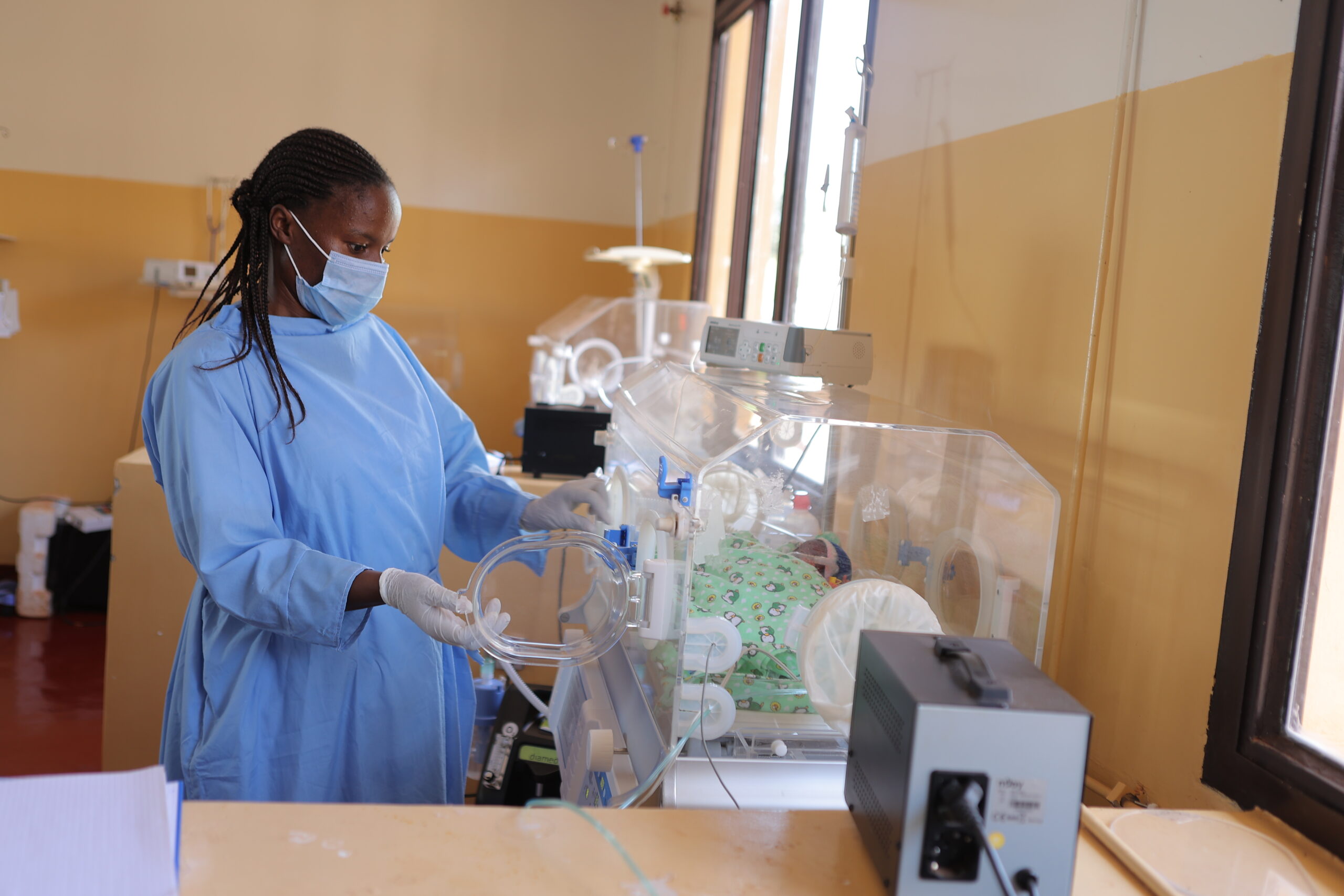
At the University Teaching Hospital in Butare (CHUB), health researchers highlight the positive impact of Continuous Positive Airway Pressure (CPAP) machines on neonatal care. CPAP is a respiratory therapy that assists newborns with breathing difficulties by pumping air into their lungs through the nose or mouth. The hospital, which serves residents of Huye and parts of Nyamagabe, has seen a significant reduction in neonatal mortality since receiving factory-made CPAP machines.
In 2022, CHUB had one of the highest neonatal mortality rates in Rwanda, with 64% of neonatal deaths compared to the national figure of 52%. This was largely because severe pregnancy cases were referred from district hospitals lacking CPAP machines. However, the donation of 10 factory-made CPAP machines from Enabel, a Belgian development agency, among other sources, has led to a noticeable decrease in neonatal deaths. Research at CHUB showed that the mortality rate of neonates in the NICU dropped from 24% to below 8% after the introduction of CPAP machines. Out of 80 neonates admitted, factory-made CPAPs saved 59 babies, while improvised ones saved 21.
Dr. Mary Hadley, Enabel’s Monitoring and Evaluation Technical Advisor for Maternal, Neonatal, Child, Sexual, and Reproductive Health, stated, “Our study confirmed that the CPAP machines significantly reduced neonatal mortality.” These findings have been presented at various health forums and are expected to inform Rwanda’s 5th Health Sector Strategic Plan (2024-2029).
The benefits of CPAP machines extend beyond CHUB. At Kibirizi Hospital in Gisagara district, the number of CPAP machines increased from two to seven due to Enabel’s donations, resulting in neonatal deaths decreasing from 15% in 2021 to 9.4%. Yvette Umukundwa, Director of Nursing and Midwifery at Kibirizi Hospital, noted that more machines would be needed as patient numbers grow.
Training and equipment upgrades are also enhancing maternal care. Lydia Muhoza, a midwife at Kibirizi Hospital, received training to use ultrasound machines, which were previously considered for doctors only. This training has improved early pregnancy detection and maternal care. For instance, Florence Mutuyimana, a patient, discovered she was 30 weeks pregnant only after an ultrasound, enabling her to plan for a safe delivery.
The availability of ultrasound services has improved maternal health outcomes by accurately detecting pregnancy complications early, leading to a rise in facility births from 87% to 96%. The number of mothers seeking ultrasound services has also increased, with Muhoza handling an average of 21 patients a day.
To sustain these improvements, it is essential to train midwives and biomedical technicians in maintaining medical equipment. Dr. Francois Regis Cyiza from the Rwanda Biomedical Center emphasized that the next five-year Belgium-Rwanda health cooperation will focus on health equipment, training, and infrastructure development to continue enhancing maternal and neonatal health outcomes.
 Life With Ivy